
-
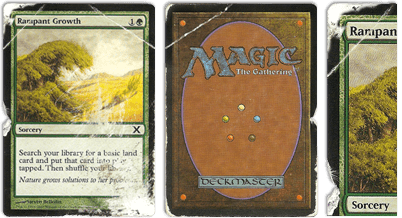
Magic: The Gathering
America's Most Influential Jazz Artists - Paperback (ONLINE ORDER ONLY)


America's Most Influential Jazz Artists - Paperback (ONLINE ORDER ONLY)
Regular Price $22.49Product Type : Books
Hurry! Only0units left in stock! This Item is Availible Online OnlyPrice & Availability will vary by locationItem LocationWarehouseAverage Processing Time24-72 HoursNo In store pickupOnline Order only
by Charles River (Author)
*Includes pictures
*Includes online resources and a bibliography for further reading
"Art is dangerous. It is one of the attractions: when it ceases to be dangerous you don't want it." - Duke Ellington
Louis Armstrong once claimed that "Every time I close my eyes blowing that trumpet of mine-I look right in the heart of good old New Orleans...It has given me something to live for." This statement conjures an image which most anyone familiar with jazz music can recall: Armstrong clutching his trumpet forcefully, his eyes closed in a manner that distances him from his physical surroundings in favor of a perfect harmony between the man and his instrument. As Armstrong alludes to in this remark, this connection also speaks to the enduring influence of his New Orleans background, which informed his musical style and indeed continued to live on through his music. To be sure, while performing, Armstrong appeared lost in a reverie, a condition that imbued his performances with a kind of mythical flair, as if one were watching a man consumed by a moment of transcendence. In other words, if the music of Louis Armstrong produced an emotional response in the listener, this invariably paled in comparison with the deep, organic pathos he was able to produce through his music.
In 1956, Duke Ellington was featured on the cover of Time Magazine after a bravura performance at the Newport Jazz Festival that summer. This remains one of his most iconic achievements, and a landmark for jazz music as a whole (only four jazz musicians were ever displayed on the cover of Time). At the same time, however, this recognition stands as one of the prevailing ironies of Ellington's career, as he was deep into the latter stages of his performing life by this point. Indeed, there is a way in which everything that Ellington had done up to that point in his career was obscured. Put differently, it is misleading to recognize Duke simply for his accomplished performance at the festival, as one could justifiably argue that he transformed the very nature of jazz (both its stylistic qualities and its cultural identity) in his career up until this point.
While those two men became jazz's most famous performers, others rose as legendary singers. If Billie Holiday wanted to become a jazz singer, she chose the best of all eras in which to attempt it. A wave of great jazz and jazz/pop crossover artists swept over the United States from the 1920s through the 1950s, generating a golden age for the genre. This wondrous jazz era was well represented by both black and white master artists, men, women, vocalists, and instrumentalists, and Billie Holiday has stood the test of time as well as any, despite struggling with an environment that easily could have doomed such aspirations.
Etta James, the legendary jazz, gospel, rhythm & blues, and soul singer, was perfectly positioned to reign as the supreme artist in the emerging soul genre of the '40s and '50s in America. No one ever doubted her talent, the highly distinctive and versatile nature of her voice, or her drive to succeed, and yet, she has been "woefully overlooked" in the history of indigenous rock and blues music in the United States. She is famous and recognized for several iconic hits with which she is eternally associated, such as "I'd Rather Go Blind" and "At Last," but her place in the pantheon of great soul artists is unsteady and not always instantly recognizable by those outside of a knowledgeable group of devotees. For the rest of soul music's listeners, mention of her name will result in a hasty inclusion into the inner circle of leading artists, as though James had been momentarily forgotten. Once the object of focus, however, she is revered as one of the titans of the genre, and those who had allowed her to slip from their minds are immediately reawakened to her powerful vocal and interpretive gifts.Number of Pages: 152Dimensions: 0.33 x 11 x 8.5 INPublication Date: May 03, 2019All Sales are Final.
No Refunds or Exchanges.
- Tumblr
- YouTube
- Discord
-





 '
' '
' '
' '
' '
'